
Showing posts with label Koenigsegg. Show all posts
Showing posts with label Koenigsegg. Show all posts
Wednesday, May 18, 2011

Tuesday, May 17, 2011
Koenigsegg cc wallpapers
Koenigsegg cc

Koenigsegg cc wallpapers

Koenigsegg cc

Koenigsegg cc pictures

Koenigsegg cc


Koenigsegg cc wallpapers

Koenigsegg cc

Koenigsegg cc pictures
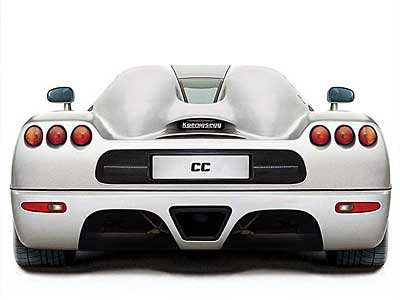
Koenigsegg cc

Thursday, May 12, 2011
Koenigsegg CCXR Trevita, 2008
Koenigsegg CCXR Trevita, 2008


When sunlight hits the Koenigsegg CCXR Trevitas, it sparkles like millions of silvery white diamonds infused inside the visible carbon fiber weave bodywork.
Trevita is an abbreviation in Swedish and translates into - three whites. The Koenigsegg visible carbon weave body work is renowned around the globe for its perfection and uniqueness. However, so far it has only been possible to utilize the classic black carbonfibres.
As Koenigsegg always strives to create new unique technologies and solutions.
By utilising a new and unique method, Koenigsegg has managed to coat fibers with a diamond finish. The process was fully developed at Koenigsegg headquarters in Ängelholm Sweden, where the fiber treatment is conducted carefully in small quantities, prior to further processing the prepreg material.
Koenigsegg will only produce three Koenigsegg CCXR Trevitas in total, hence the name. This makes the Trevita one of the most rare versions in the Koenigsegg family cars.
The three cars are fully equipped with Koenigsegg Shimmering Diamond Weave bodywork, double carbon wing, paddle-shift, inconell exhaust system, carbon ceramic brakes with ABS, hydraulic lifting system, infotainment system, tyre monitoring system, chrono instrument cluster and airbags.
Trevita is an abbreviation in Swedish and translates into - three whites. The Koenigsegg visible carbon weave body work is renowned around the globe for its perfection and uniqueness. However, so far it has only been possible to utilize the classic black carbonfibres.
As Koenigsegg always strives to create new unique technologies and solutions.
By utilising a new and unique method, Koenigsegg has managed to coat fibers with a diamond finish. The process was fully developed at Koenigsegg headquarters in Ängelholm Sweden, where the fiber treatment is conducted carefully in small quantities, prior to further processing the prepreg material.
Koenigsegg will only produce three Koenigsegg CCXR Trevitas in total, hence the name. This makes the Trevita one of the most rare versions in the Koenigsegg family cars.
The three cars are fully equipped with Koenigsegg Shimmering Diamond Weave bodywork, double carbon wing, paddle-shift, inconell exhaust system, carbon ceramic brakes with ABS, hydraulic lifting system, infotainment system, tyre monitoring system, chrono instrument cluster and airbags.
Koenigsegg CCXR Trevita, 2010
Koenigsegg CCXR Trevita, 2010


When sunlight hits the Koenigsegg CCXR Trevitas, it sparkles like millions of silvery white diamonds infused inside the visible carbon fiber weave bodywork.
Trevita is an abbreviation in Swedish and translates into - three whites. The Koenigsegg visible carbon weave body work is renowned around the globe for its perfection and uniqueness. However, so far it has only been possible to utilize the classic black carbonfibres.
As Koenigsegg always strives to create new unique technologies and solutions, we have now reached a new milestone - The Koenigsegg Proprietary Diamond Weave.
By utilising a new and unique method, Koenigsegg has managed to coat fibers with a diamond finish. The process was fully developed at Koenigsegg headquarters in Ängelholm Sweden, where the fiber treatment is conducted carefully in small quantities, prior to further processing the prepreg material.
Koenigsegg will only produce three Koenigsegg CCXR Trevitas in total, hence the name. This makes the Trevita one of the most rare versions in the Koenigsegg family cars.
The three cars are fully equipped with Koenigsegg Shimmering Diamond Weave bodywork, double carbon wing, paddle-shift, inconell exhaust system, carbon ceramic brakes with ABS, hydraulic lifting system, infotainment system, tyre monitoring system, chrono instrument cluster and airbags.
Trevita is an abbreviation in Swedish and translates into - three whites. The Koenigsegg visible carbon weave body work is renowned around the globe for its perfection and uniqueness. However, so far it has only been possible to utilize the classic black carbonfibres.
As Koenigsegg always strives to create new unique technologies and solutions, we have now reached a new milestone - The Koenigsegg Proprietary Diamond Weave.
By utilising a new and unique method, Koenigsegg has managed to coat fibers with a diamond finish. The process was fully developed at Koenigsegg headquarters in Ängelholm Sweden, where the fiber treatment is conducted carefully in small quantities, prior to further processing the prepreg material.
Koenigsegg will only produce three Koenigsegg CCXR Trevitas in total, hence the name. This makes the Trevita one of the most rare versions in the Koenigsegg family cars.
The three cars are fully equipped with Koenigsegg Shimmering Diamond Weave bodywork, double carbon wing, paddle-shift, inconell exhaust system, carbon ceramic brakes with ABS, hydraulic lifting system, infotainment system, tyre monitoring system, chrono instrument cluster and airbags.

 PR:
PR:  LD:
LD:  I:
I:  Rank:
Rank:  C:
C: 
Monday, April 25, 2011
2011 Koenigsegg Super Cars Edo Competition CCR Evolution

2011 Koenigsegg Super Cars Edo Competition CCR Evolution
2011 Koenigsegg Super Cars Edo Competition CCR Evolution is a car that holds the title of one of the world’s fastest car. For all these reasons, one of the German tuning company “Edo Competition” which has a reputation in making a super car is faster to make modifications in the improvement of and little change in the exterior.
2011 Koenigsegg Super Cars Edo Competition CCR Evolution
Edo Koenigsegg Super Cars CCR became one of their amazing work. Additionally there are the changes made to the interior and exterior design of the vehicle. The changes are for example contained in the wheel with a layer of charcoal paint, the presence of additional light to the CCR model, and materials throughout the cabin Alcantara on Koenigsegg’s provides a sense of more luxurious.
2011 Koenigsegg Super Cars Edo Competition CCR Evolution
Edo has managed to upgrade with the exotic, rare and unique characteristic to them. However, the most impressive aspect is still intense and violent acceleration, which is almost unparalleled, even in the field of supercars.
Since the V8 engine is being force-fed by twin superchargers, the main focus was on the setup of the two Rotrex units. With assistance from the manufacturer the drive ratio was modified and the ECU was remapped to accommodate the hardware changes. The aim was to increase the power output while maintaining a broad torque curve over the whole rev range. With the new drive ratio the engine hits its torque peak earlier and puts out up to 891 horsepower, depending on the level of tune. In order to ensure long term reliability of the superchargers, the engine redline was lowered to 7,200 rpm.

2011 Koenigsegg Super Cars Edo Competition CCR Evolution have a over haul gear transmition change to six speed gearbox transmition.it can produce rotation in just 3,700 rpm all the way up to 6,000 rpm,finely tuned directional stability beyond 300 km/h (186 mph) and a top speed that was reduced slightly from 390 km/h (242 mph) for phenomenal and significantly improved acceleration and drivability.

2011 Koenigsegg Super Cars Edo Competition CCR Evolution
To make changes, Edo Koenigsegg contacted to help with a modification ratio of the drive and remapping the ECU. After focusing on the setup of the two superchargers, they ensure that they can generate maximum power while providing a wider range of torque throughout the powerband, hitting the maximum torque earlier and actually reduces the rev limiter to 7200 RPM.
2011 Koenigsegg Super Cars Edo Competition CCR Evolution
The result enables a V8 engine to produce up to 891 HP now – up from standard 806 HP. The six-speed gearbox was dismantled in its entirety and replaced with plastic bushing Uniball unit. All work to enable 2011 Koenigsegg Super Cars Edo Competition CCR Evolution engine to get to 62 mph in 3.2 seconds, to 124 mph in 9.7 seconds and 186 mph in 23 seconds.
As for the exterior 2011 Koenigsegg Super Cars Edo Competition CCR Evolution, the tuner offers a new set of wheels with a layer of charcoal and paint the front end is updated with additional lights. The interior of the Koenigsegg then covered in Alcantara materials and a redesigned center console added to accommodate the new infotainment system with reverse camera and bag custom-made for a remote immobilizer.

2011 Koenigsegg Super Cars Edo Competition CCR Evolution
The bottom line: edo competition has succeeded in upgrading this extremely rare exotic with fine details without watering down its distinctly unique character. However, the most impressive aspect is still the intense and violent acceleration, which is virtually unparalleled, even in the realm of supercars.
2011 Koenigsegg Super Cars Edo Competition CCR Evolution
Additional changes were made to the design of the vehicle’s interior and exterior. The wheels for example underwent a beauty treatment and received a coat of charcoal paint. The updated front with auxiliary lights now resembles the later CCR models, and the Alcantara material that was used throughout the Koenigsegg’s cabin provides a more luxurious feel. The redesigned center console now accommodates a new infotainment system including a reversing camera as well as a custom-made pouch for the immobilizer remote. For safety reasons a TPM system now informs the driver about tire pressures and temperatures. The display was integrated into the dashboard.
2011 Koenigsegg Super Cars Edo Competition CCR Evolution
All modifications are carried out exclusively at edo competition Motorsport GmbH in Ahlen. Upgrade package total 2011 Koenigsegg Super Cars Edo Competition CCR Evolution will make customers come back 40,000 euros, or $ 56,828 at current rates.Wednesday, April 13, 2011
Koenigsegg CCX, 2006
Koenigsegg CCX, 2006


The CCX is the latest iteration of the Koenigsegg CC family. The CCX is in many aspects a new car since it has been re-engineered to comply with the US regulation and market demands. Still, it has been a key issue for the Koenigsegg Team to keep the distinctive and record breaking CC shape. Koenigsegg believes it is important to avoid trends and instead hone the aerodynamic shape of the CC range for the future, only enhancing its unique look and appearance with tighter lines and a more aggressive stance. At Koenigsegg they also believe in continuity. A new Koenigsegg shall show clear lineage from its predecessor and shall not follow any other design trends - but enhance its already proven concept and shape to perfection.
Body & Interior
The CCX features a completely new set of body and interior parts. The new body incorporates a new front bumper design, engineered to function well in the stringent 2.5 mph bumper test, including enhanced brake cooling, fog lamps and US side position lights. The front lamps have been slightly redesigned to suit the new bumper line.
There is a new scoop on the front bonnet acting as a larger fresh air-intake for the occupants and new air vents have been added behind the front wheels in order to further evacuate air from the cockpit. The frontal shape revisions now allow for effective track use options to be added.
The side rocker panels feature side skirts in order to further enhance downforce by increasing underbody area. The new exterior of the car has been created using the industry leading Icem Surf CAD software, guaranteeing a perfect fit and finish as well as optimal highlights.
The car is 88 mm longer in order to comply with the US rear impact regulations and in order to free up space around the rear muffler. The rear clamshell now features a glass window over the new CCX engine, clearly showing off the bespoke and unique Koenigsegg Block casting. The mufflers have received improved cooling, by incorporating grill vents above in the clamshell. The number plate area is now adapted to suit both US and Euro size number plates.
Space
There is a further 50 mm in headroom, making the CCX the most spacious super car on the market, truly considering the taller drivers needs. Koenigsegg believes to have found a unique market niche by enabling really tall drivers to fit well inside the car, still with its highest point only 1120 mm above the tarmac.
Seats
In corporation with Sparco, and Koenigsegg test driver Loris Bicocchi, Koenigsegg has developed a new seat design for the CCX. The structure of the seat are still carbon fiber, but now feature fully padded front surface and a tilting backrest. The striking and very comfortable Tempur padded CCR seats can still be fitted in the CCX on special order.
Wheels / Brakes
The optimal ceramic 382 mm front discs are coupled to 8 piston calipers and in the rear the 362 mm size is retained with 6 piston calipers. The optional industry first carbon fiber wheels save another 3 kg per wheel compared to the already lightweight magnesium wheels that comes as standard. The ceramic discs save another 2 kg per wheel, giving the Koenigsegg CCX lower unsprung weight than any other super car.
Aerodynamic Enhancement
Between the raised speedster humps there is a new type of vortex generator originally conceived and patented by Torbjörn Gustavsson at Vortaflow and implemented as a Ram Air engine booster by Christian Koenigsegg on the CCX. Due to the fact that there is a fresh air engine intake right below the rear window, the vortex generator redirects the air directly into the air intake and thereby creating a positive pressure in the air box. To normally obtain this phenomenon in a mid engine car a roof scoop is required, increasing frontal area. In the case of the CCX, the small frontal area can still be kept and rearward visibility is unaffected, even though it has now got true ram air intake over its mid mounted engine.
Electronics
The CCX now features, wholly digital, intelligent fuse and relay unit. This means that there are not physical fuses or relays as such. The unit is programmable and is can-bus connected to a display unit which sends crucial information to the driver. The main advantages of this system are its reliability, light weight, small physical size, programmability and direct information to the driver. The system is prepared for future upgrades and functions.
Unique Koenigsegg Engine
The engine in the CCX retains the incredible performance and power of the CCR engine, while running on US 91 octane fuel and complying with California emission regulations. In order to reach this challenging goal, extensive rework had to be done to emission related items, such as new cylinder heads with larger valve area and more optimally flowing cylinder head ports. Dual smaller injectors per cylinder were integrated, as well as new camshafts, a new carbon fiber individual runner intake plenum, a new engine management system, updated fuel and EVAP system. New exhaust system where the catalytic converters are moved closer to the engine for earlier light-off time. A returnless fuel system has also been implemented with pumps integrated into the new fuel tank. All in all, a heavy rework in order to retain the unique performance of the CCX engine and at the same time comply with the strictest emission regulations in the world.
The new and cleaner CCX engine also incorporates the first engine block design that is specifically created and cast for Koenigsegg, with the Koenigsegg shield embossed in the casting on both left and right side of the engine block. The new block design is an all aluminum construction made out of 356 aluminum with T7 heat treat that has undergone a High Intensity Pressure process in order to further enhance block integrity as well as cylinder bore chill during casting. The new block reaffirms the future development of Koenigsegg engines and makes Koenigsegg stand out among low volume supercar manufacturers, due to the fact that Koenigsegg engineer the engine completely in house in combination with the fact that it is also built, assembled, and dyno tested in the Koenigsegg production plant. The Koenigsegg Engineers also incorporated the most powerful internal piston coolers in the industry - bringing down the piston temperature, by as much as 80% more than competing systems, which was a must in order to run high cylinder pressure with 91 octane fuel.
Koenigsegg CCX, 2006
Koenigsegg CCX, 2006
The CCX is the latest iteration of the Koenigsegg CC family. The CCX is in many aspects a new car since it has been re-engineered to comply with the US regulation and market demands. Still, it has been a key issue for the Koenigsegg Team to keep the distinctive and record breaking CC shape. Koenigsegg believes it is important to avoid trends and instead hone the aerodynamic shape of the CC range for the future, only enhancing its unique look and appearance with tighter lines and a more aggressive stance. At Koenigsegg they also believe in continuity. A new Koenigsegg shall show clear lineage from its predecessor and shall not follow any other design trends - but enhance its already proven concept and shape to perfection.
Body & Interior
The CCX features a completely new set of body and interior parts. The new body incorporates a new front bumper design, engineered to function well in the stringent 2.5 mph bumper test, including enhanced brake cooling, fog lamps and US side position lights. The front lamps have been slightly redesigned to suit the new bumper line.
There is a new scoop on the front bonnet acting as a larger fresh air-intake for the occupants and new air vents have been added behind the front wheels in order to further evacuate air from the cockpit. The frontal shape revisions now allow for effective track use options to be added.
The side rocker panels feature side skirts in order to further enhance downforce by increasing underbody area. The new exterior of the car has been created using the industry leading Icem Surf CAD software, guaranteeing a perfect fit and finish as well as optimal highlights.
The car is 88 mm longer in order to comply with the US rear impact regulations and in order to free up space around the rear muffler. The rear clamshell now features a glass window over the new CCX engine, clearly showing off the bespoke and unique Koenigsegg Block casting. The mufflers have received improved cooling, by incorporating grill vents above in the clamshell. The number plate area is now adapted to suit both US and Euro size number plates.
Space
There is a further 50 mm in headroom, making the CCX the most spacious super car on the market, truly considering the taller drivers needs. Koenigsegg believes to have found a unique market niche by enabling really tall drivers to fit well inside the car, still with its highest point only 1120 mm above the tarmac.
Seats
In corporation with Sparco, and Koenigsegg test driver Loris Bicocchi, Koenigsegg has developed a new seat design for the CCX. The structure of the seat are still carbon fiber, but now feature fully padded front surface and a tilting backrest. The striking and very comfortable Tempur padded CCR seats can still be fitted in the CCX on special order.
Wheels / Brakes
The optimal ceramic 382 mm front discs are coupled to 8 piston calipers and in the rear the 362 mm size is retained with 6 piston calipers. The optional industry first carbon fiber wheels save another 3 kg per wheel compared to the already lightweight magnesium wheels that comes as standard. The ceramic discs save another 2 kg per wheel, giving the Koenigsegg CCX lower unsprung weight than any other super car.
Aerodynamic Enhancement
Between the raised speedster humps there is a new type of vortex generator originally conceived and patented by Torbjörn Gustavsson at Vortaflow and implemented as a Ram Air engine booster by Christian Koenigsegg on the CCX. Due to the fact that there is a fresh air engine intake right below the rear window, the vortex generator redirects the air directly into the air intake and thereby creating a positive pressure in the air box. To normally obtain this phenomenon in a mid engine car a roof scoop is required, increasing frontal area. In the case of the CCX, the small frontal area can still be kept and rearward visibility is unaffected, even though it has now got true ram air intake over its mid mounted engine.
Electronics
The CCX now features, wholly digital, intelligent fuse and relay unit. This means that there are not physical fuses or relays as such. The unit is programmable and is can-bus connected to a display unit which sends crucial information to the driver. The main advantages of this system are its reliability, light weight, small physical size, programmability and direct information to the driver. The system is prepared for future upgrades and functions.
Unique Koenigsegg Engine
The engine in the CCX retains the incredible performance and power of the CCR engine, while running on US 91 octane fuel and complying with California emission regulations. In order to reach this challenging goal, extensive rework had to be done to emission related items, such as new cylinder heads with larger valve area and more optimally flowing cylinder head ports. Dual smaller injectors per cylinder were integrated, as well as new camshafts, a new carbon fiber individual runner intake plenum, a new engine management system, updated fuel and EVAP system. New exhaust system where the catalytic converters are moved closer to the engine for earlier light-off time. A returnless fuel system has also been implemented with pumps integrated into the new fuel tank. All in all, a heavy rework in order to retain the unique performance of the CCX engine and at the same time comply with the strictest emission regulations in the world.
The new and cleaner CCX engine also incorporates the first engine block design that is specifically created and cast for Koenigsegg, with the Koenigsegg shield embossed in the casting on both left and right side of the engine block. The new block design is an all aluminum construction made out of 356 aluminum with T7 heat treat that has undergone a High Intensity Pressure process in order to further enhance block integrity as well as cylinder bore chill during casting. The new block reaffirms the future development of Koenigsegg engines and makes Koenigsegg stand out among low volume supercar manufacturers, due to the fact that Koenigsegg engineer the engine completely in house in combination with the fact that it is also built, assembled, and dyno tested in the Koenigsegg production plant. The Koenigsegg Engineers also incorporated the most powerful internal piston coolers in the industry - bringing down the piston temperature, by as much as 80% more than competing systems, which was a must in order to run high cylinder pressure with 91 octane fuel.
Monday, April 4, 2011
Edo Competition has it with Evo magazine Koenigsegg
 |
| Koenigsegg |
Already one of the fastest cars on the street, the Koenigsegg CCRis not the first to come to mind when one is on a vehicle that could use some additional tuning. He has 816 hp, after all can, and up by about 245 miles per hour. What more could you want?
 |
| Koenigsegg |
 |
| Koenigsegg |
 |
| Koenigsegg |
 |
| Koenigsegg |
 |
| Koenigsegg |
 |
| Koenigsegg |
 |
| Koenigsegg |
 |
| Koenigsegg |
Subscribe to:
Posts (Atom)